| Training and Education
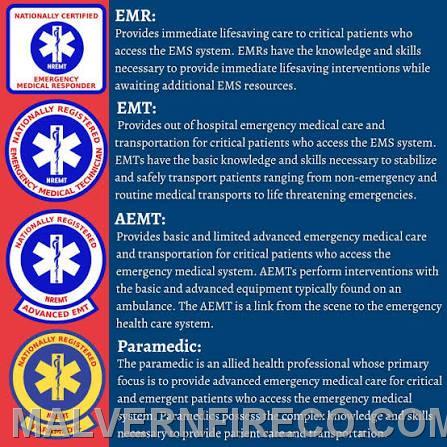
* EMTs: Require approximately 120 to 150 hours of foundational coursework. This can usually be completed in a few months.
* Paramedics: Require 1,200 to 1,800 hours of rigorous instruction, often taking 18 to 24 months and frequently resulting in an Associate Degree. A paramedic must first be certified as an EMT before undergoing this advanced training.
Scope of Care
* EMTs: Focus on maintaining airway, breathing, and circulation. Their skills include CPR, administering oxygen, controlling bleeding, splinting fractures, and administering basic medications like epinephrine for severe allergic reactions.
* Paramedics: Can perform all the duties of an EMT, plus invasive procedures. They are authorized to start IVs, administer a wide range of emergency drugs (cardiac, respiratory, pain), interpret electrocardiograms (EKGs), and perform advanced airway management like intubation.
Career Path and Salary
* EMTs: Serve as the entry-level tier for ambulance services. They have a median annual salary of roughly $41,000.
* Paramedics: Hold the highest certification tier for pre-hospital emergency care. Because of their advanced responsibilities, they have a median salary of around $58,000.
Bottom line: Every paramedic starts as an EMT, but paramedics receive significantly more education and provide a much broader range of lifesaving |