|
|
Summer Pool Safety |
| By Leadership Team | |
| May 26, 2026 | |
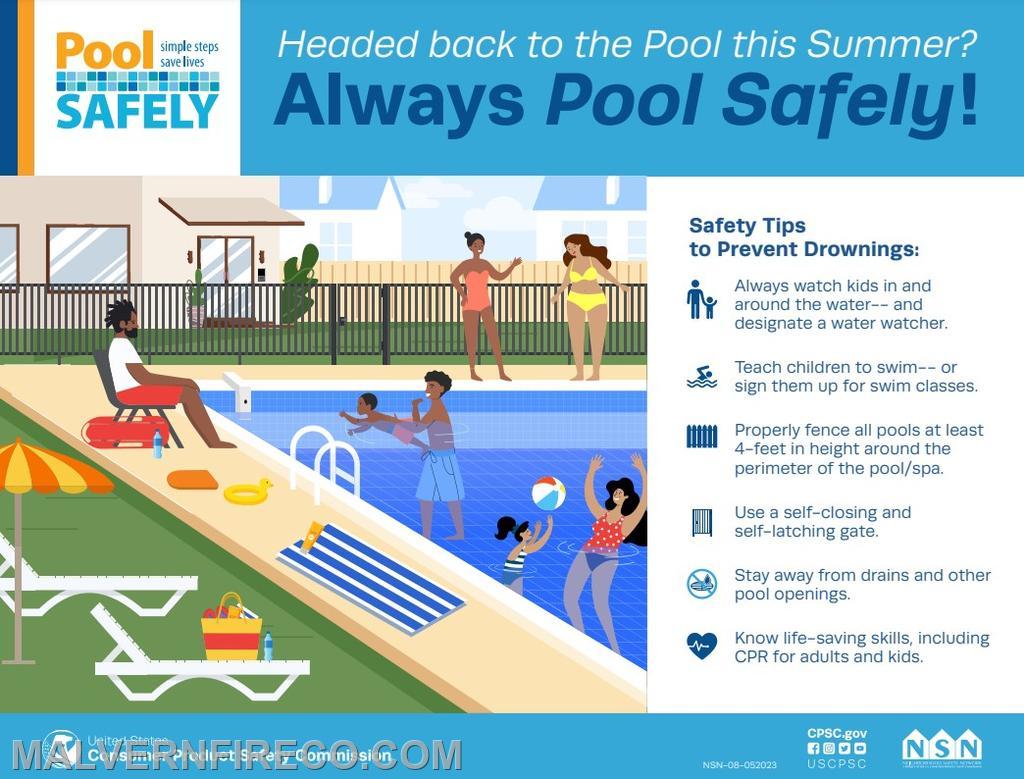
| Adult supervision is vital for pool safety. Never leave children unattended near a pool, even for a moment. Designate a “Water Watcher” whose only responsibility is to supervise swimmers. Supervisors should avoid distractions such as phones, conversations, or alcohol while watching over the pool area. Swimming skills can prevent accidents. Enroll children in age-appropriate swim lessons and teach swimmers to never swim alone. Make sure everyone who uses the pool knows basic water safety rules along with how to float or tread water. Proper pool barriers and security features are also essential. Install a four-sided fence at least four feet high with a self-closing, self-latching gate. Use pool alarms and safety covers whenever the pool is not in use. Keep furniture and other climbable objects away from the fence to prevent children from gaining access. Life jackets save lives. Use U.S. Coast Guard-approved life jackets for inexperienced swimmers and during boating activities. Do not rely on inflatable toys, floats, or water wings as safety devices. Being prepared for emergencies is important. Keep rescue equipment close to the pool, such as a life ring or shepherd’s hook, a first aid kit, and a phone for emergencies. Learn CPR and basic first aid, as immediate action can save lives in an emergency. Diving safety measures help prevent serious injuries. Never dive into shallow water, and clearly mark pool depths. Always enter unfamiliar water feet first. Take steps to prevent slips and falls around the pool. Walk, never run, on the pool deck. Clean up standing water to reduce slipping hazards and keep pool areas free of toys and clutter. Protect against heat and sun exposure by applying broad-spectrum sunscreen regularly and encouraging frequent hydration. Take breaks in shaded or cool areas when spending extended time outdoors. Electrical safety is crucial near pools. Keep all electrical appliances and cords away from the pool area. Ensure pool lighting and pumps are installed by qualified professionals and are protected by GFCI (ground-fault circuit interrupter) outlets. Pool chemical safety can prevent injuries. Store chemicals in a cool, dry, well-ventilated area away from children. Never mix chemicals, and always follow manufacturer instructions when handling pool chemicals. After swimming, remove toys from the pool so children do not try to retrieve them. Lock gates and secure safety covers to prevent unsupervised access. Drowning can happen quickly and often without warning. Layers of safety—including supervision, barriers, swimming ability, and emergency preparedness—offer the best protection. For more guidance, consult resources from the American Red Cross and the Centers for Disease Control and Prevention. |
|
|
|